Yes, there are links to the demos in the announcement above 
Doh! I assumed they were videos, lol thanks 
1 Like
you could write a program that translates MIDI files ↔ patterns
Just what I was thinking while reading the initial post / github pages… it could be useful to convert a midi file to pattern in a more organized way than just playing midi into the tracker.
Also Dependencies (0)  so nice and clean
1 Like
Haha, thanks! 
I was dabbling with support for loading entire projects in one go. But to support this for nodejs AND browers, something like zip archives was the only solution that i thought would make sense.
(some of that code is still in there btw but commented out).
I opted against it for now, as i believe this choice should be left to developers, on how they want to deal with loading / saving a full set of data for an entire project.
If i’m wrong about that, let me know 
@Sandroid Thank you!
1 Like
Amazing stuff! Congrats 
1 Like
I’m curious, is that documentation available somewhere? All the links that I find that allegedly point to that documentation are dead. Or is the library supposed to serve as documentation from now on?
1 Like
That specific documentation/repo (which contains markdown files and some python examples) is currently set to private, as it is undergoing some updates / maintenance. Once it is available i‘ll make sure to update you here.
1 Like
Looks interesting, and it seems you put a lot of efforts in it.
Just not sure who is this for. The demos are demos; fair enough; they show that you can read and write custom data structures used for instruments and patterns. So my focus goes on the main dish: the library.
From the video it seems that the library does 2 things: let you read and write different structures like instruments and patterns. Is there more you can do with the library? Like can I get a project file, take it apart and for example export just the instruments from that project?
Most of the issues I had with the tracker is that it is not that easy to move things around as everything is packed together in a project; so my hope is that this library has the ability to extrapolate data out of a project so it can be added to other projects. The pain for me is mainly for instruments import and export.
Another thing that I would love to have in a library for the tracker is the ability to do a better conversion of MOD/MED files. Polyend just dropped the ball on the subject; and since the format is closed, it is not possible to easily understand how their conversion from MOD to tracker project works Would this library have the ability to expose how a project file is made and structured, so it would be easier to write a better converter for MODS/MEDS and potentially a 2 way conversion, so I can bring back to my Amiga the tracker work I do on the hardware?
Thanks!
Yes, you absolutely can. A tracker project is made up of individual files anyway (structured within a project folder). Each pattern is its own file, so is each instrument. And then there is the project and the project metadata file. All of those are available in the library for you to do things with.
With this library it should absolutely be possible to write a more comprehensive conversion between tracker projects and mod/med files.
Now it‘s just a question of who gets there first / has the time to write it
Hope those answers helped. Else just keep asking 
How do you create a pattern without sound? 
What do you mean exactly? The pattern data itself doesn‘t carry any „sounds“ so to speak. It‘s just holds the data to tell an audio engine, when and how to play a sound.
If you mean in the pattern editor example. Let me reiterate that these are just examples of what is possible to build with the library. The pattern editor example does not play sounds.
hi @dan.apeks & @Sandroid - im here - just fixed the Polyend Project Import inside Paketti based on the 3 GitHub repos that Sandroid posted about, so that it detects the right BPM. am continuing work on this. My end-goal is to be able to import any pattern from Polyend Tracker to Renoise, or any Clipboarded content from Renoise to Polyend Tracker, and later on, full .MTP ← .XRNS → .MTP. 
will be posting about it on my Patreon when i have some updates.
Cant wait to see where these 3 repos take me, since theres enough information to hopefully be able to pull the whole process through.
Thanks for the mention, too - although, could someone handhold me through getting the Backstage Polyend Forum to notify me when theres a mention, that would really help! It took me a week to find this out, randomly - would have jumped on this earlier if i got actual notifications via email?
pls help
3 Likes
Happy to help you out there. Click on your profile icon in the top left and then go to what should be the last icon in the drop-down which is profile.
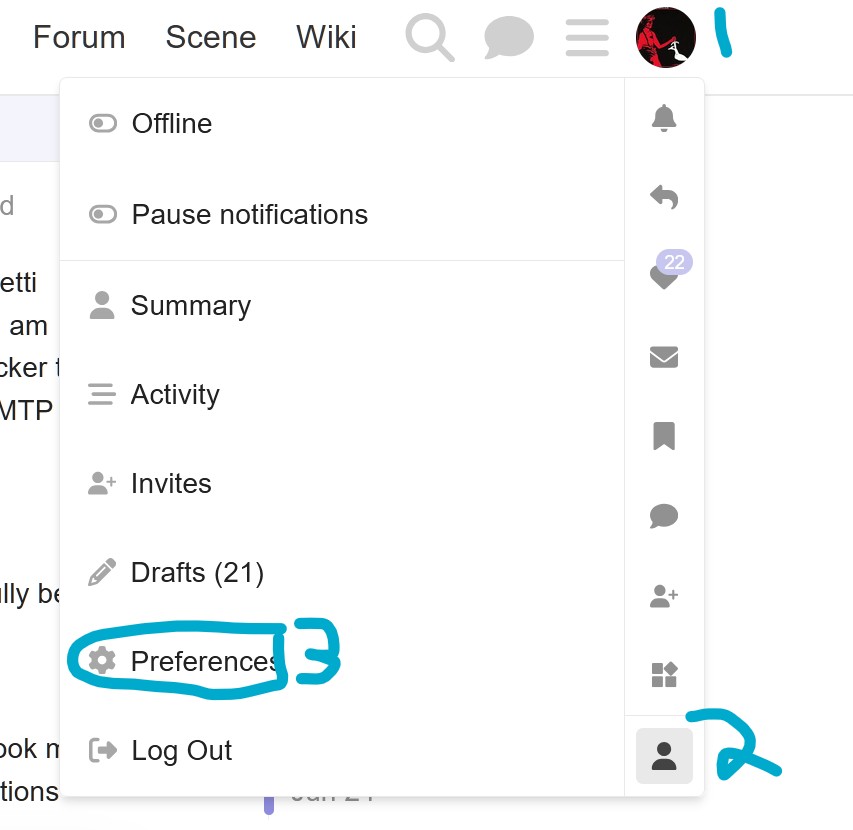
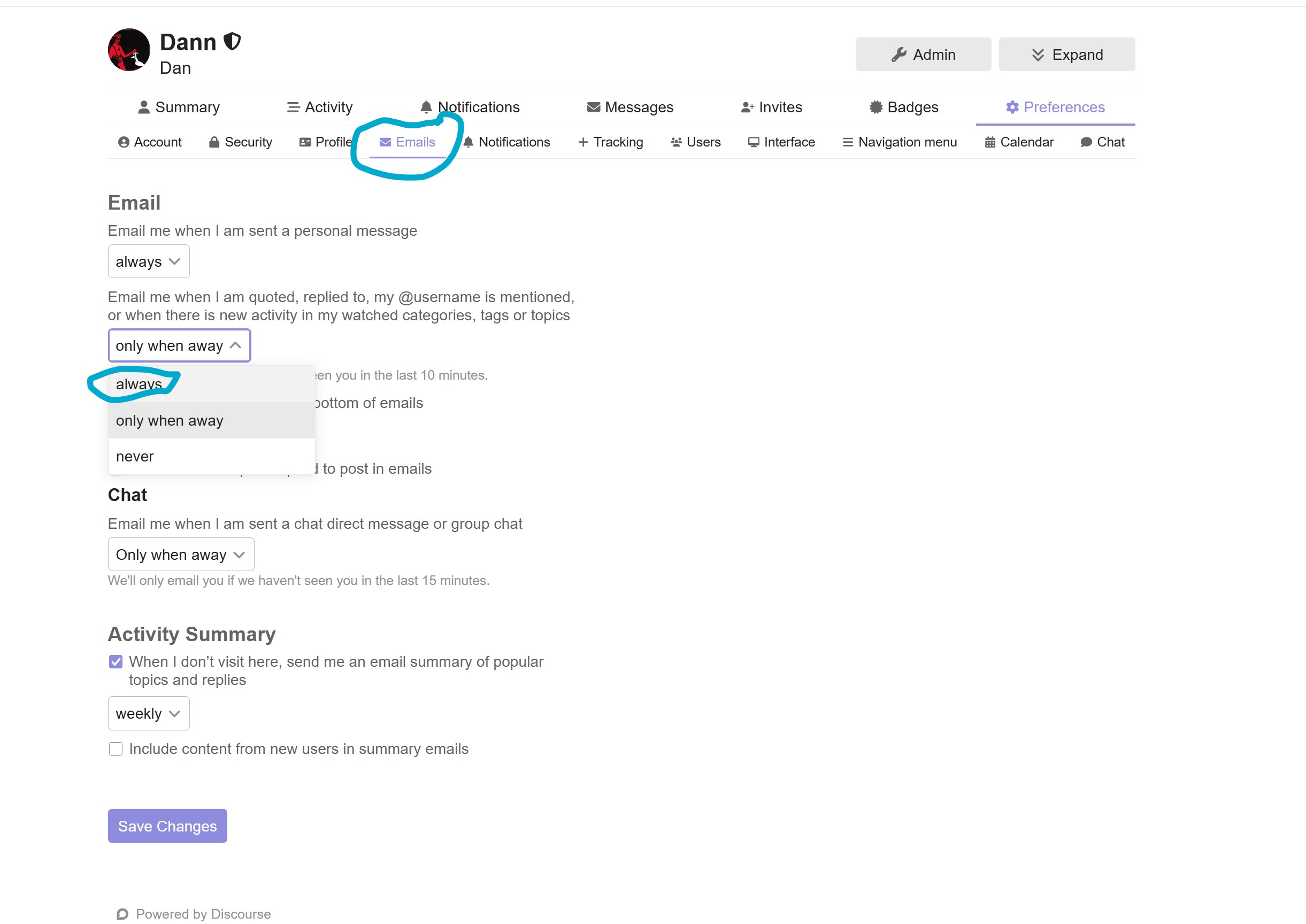
From the menu on the left, select Preferences. From the menu items, click on Email, and then the 2nd option “Email me when I am quoted, replied to, my @username is mentioned, or when there is new activity in my watched categories, tags or topics”. Set that as “Always” to get those notifications you’d like.
1 Like
Thank you @Dann !!
Version 0.1.2 of the tracker-lib has just been released:
- it fixes an issue with reading OG Tracker pattern files (more info).
This also marks the first contribution by community members, which is AWESOME to see! 
Thank you so much for participating! 
- I’ve updated the pattern editor demo, so that this fix is available there.
- I’ve also noticed that my Github notifications weren’t on correctly. This is now resolved as well. So my response time should be a little bit faster

This is as good time as any to remind people interested, that if you want to talk with me about this library, development or just trackers in general (in realtime):
Come join us on the unofficial Polyend Tracker Discord.
3 Likes
This is stellar news! Thank you for sharing!
The timing could not be better, I recently started building MidiTracker, a free browser-based Standard MIDI → Polyend Tracker+ converter.
It lets you import .mid / .midi files, preview and edit the result in a tracker-style grid, and export a Tracker+ project ZIP. Everything runs locally in the browser, with no backends and no account required.
GitHub: GitHub - david9up/miditracker · GitHub
Live demo: MidiTracker
I am already using @polyend/tracker-lib for export validation, and it has been incredibly helpful to understand the project structure and make the export process more reliable. So a big thank you to the Polyend team for opening this up and making these building blocks available.
This open ecosystem is exactly what makes tools like this possible, and I really appreciate the effort behind it. Really excited to see what people build from here, and happy to contribute feedback, testing, and ideas where useful!
4 Likes
That‘s awesome! Thank you for sharing.
1 Like
ok. so if someone wants to download Paketti from github - and install it on renoise, do let me know how your experience is bouncing patterns from between Polyend ← → Renoise → Polyend.
1 Like